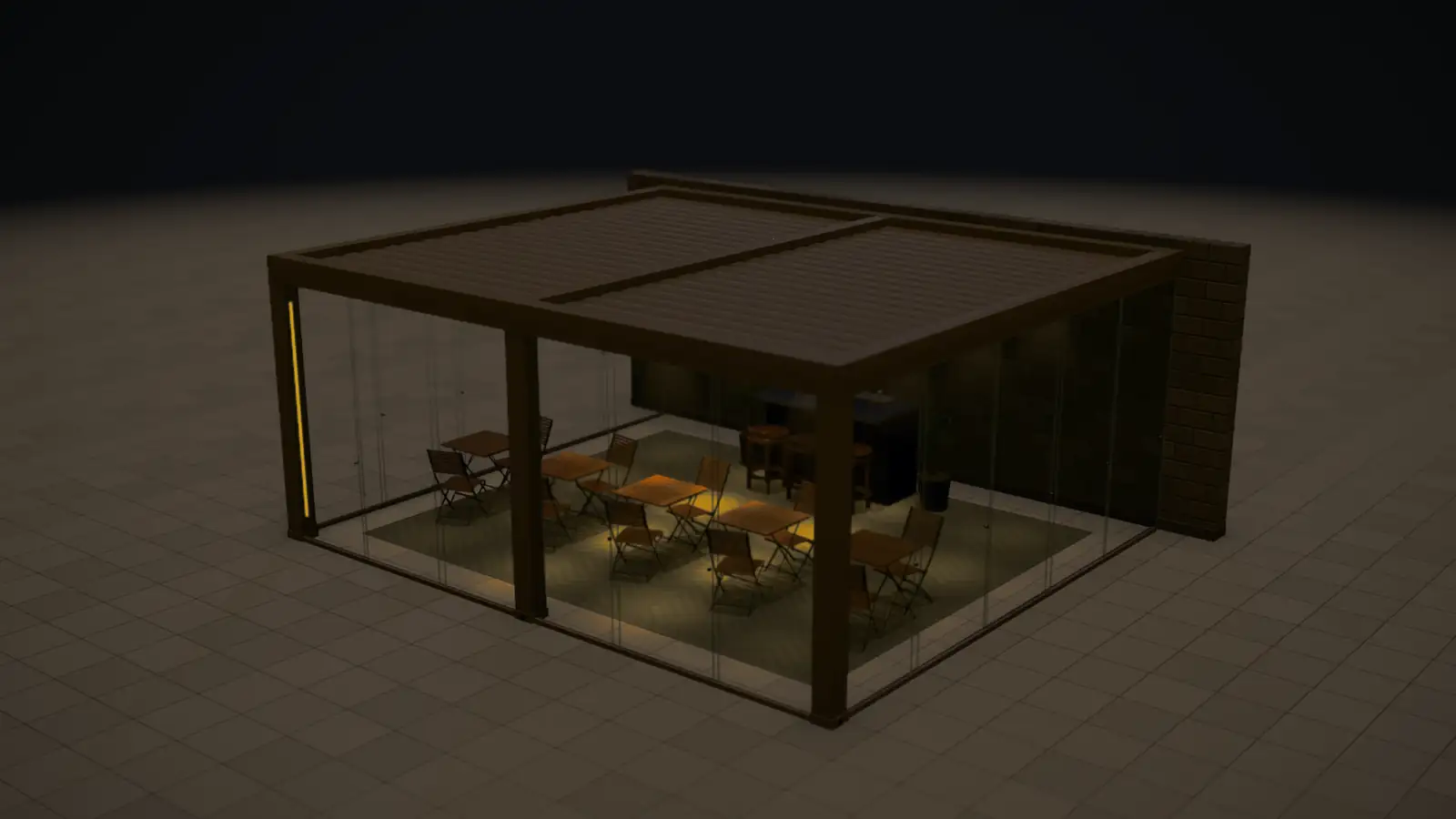
By the time the CAD file arrived
There's a project I show people even when nobody asks: the riczu.hu 3D pergola designer. Visitors set the size, the color, the glass walls, then start rain over the roof and watch the water run down the gutter. In the browser. On a phone, too.
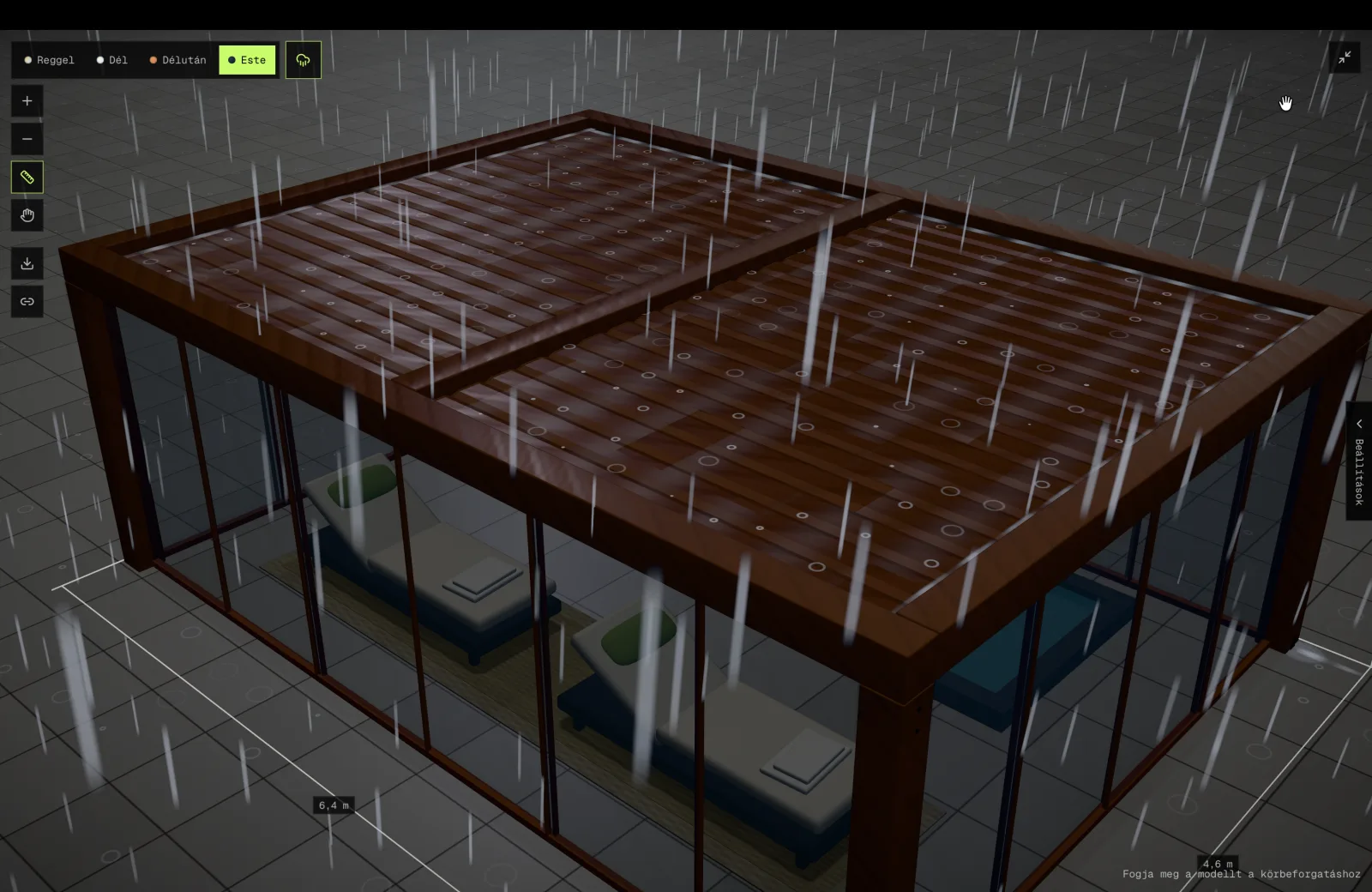
It didn't start like that. The Italian manufacturer sent no 3D CAD files at first – I got a PDF catalog with photos, renders, and dimension tables. I built the models from those, to the millimeter, faithful to the product. Louver pitch, post profile, gutter section: every number traces back to a catalog page.
Game-grade looks, catalog-grade truth
The goal was for buyers to play with their own terrace instead of filling out a form. Four times of day, rain and snow, working drainage, quiet ambient sound, camera presets – you can step inside and look around.
Furniture moves Sims-style, and the layouts follow interior-design principles: a rug anchoring the lounge zone, height layering, breathing room under a narrow roof. Even the picker thumbnails render from the live 3D scene at runtime.
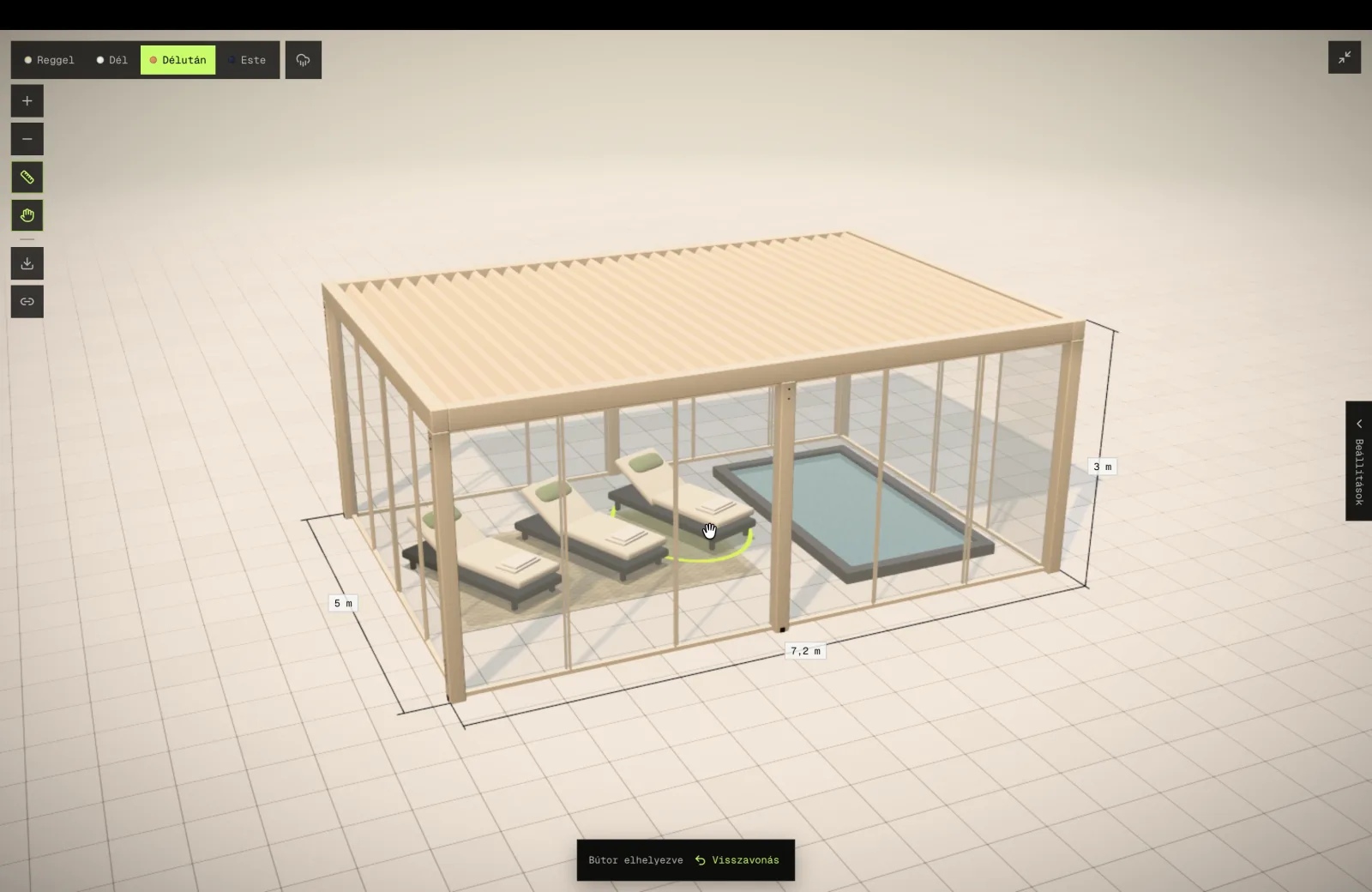
Under the play, the designer is stricter than it looks. The full product family is parametric, with rules read out of the catalog: how far each model's louvers rotate, at what span a sixth post appears, where an LED strip may be mounted. It refuses combinations the factory wouldn't build.
And it runs light – the scene measures the device it's on and keeps its pace on a modest phone.
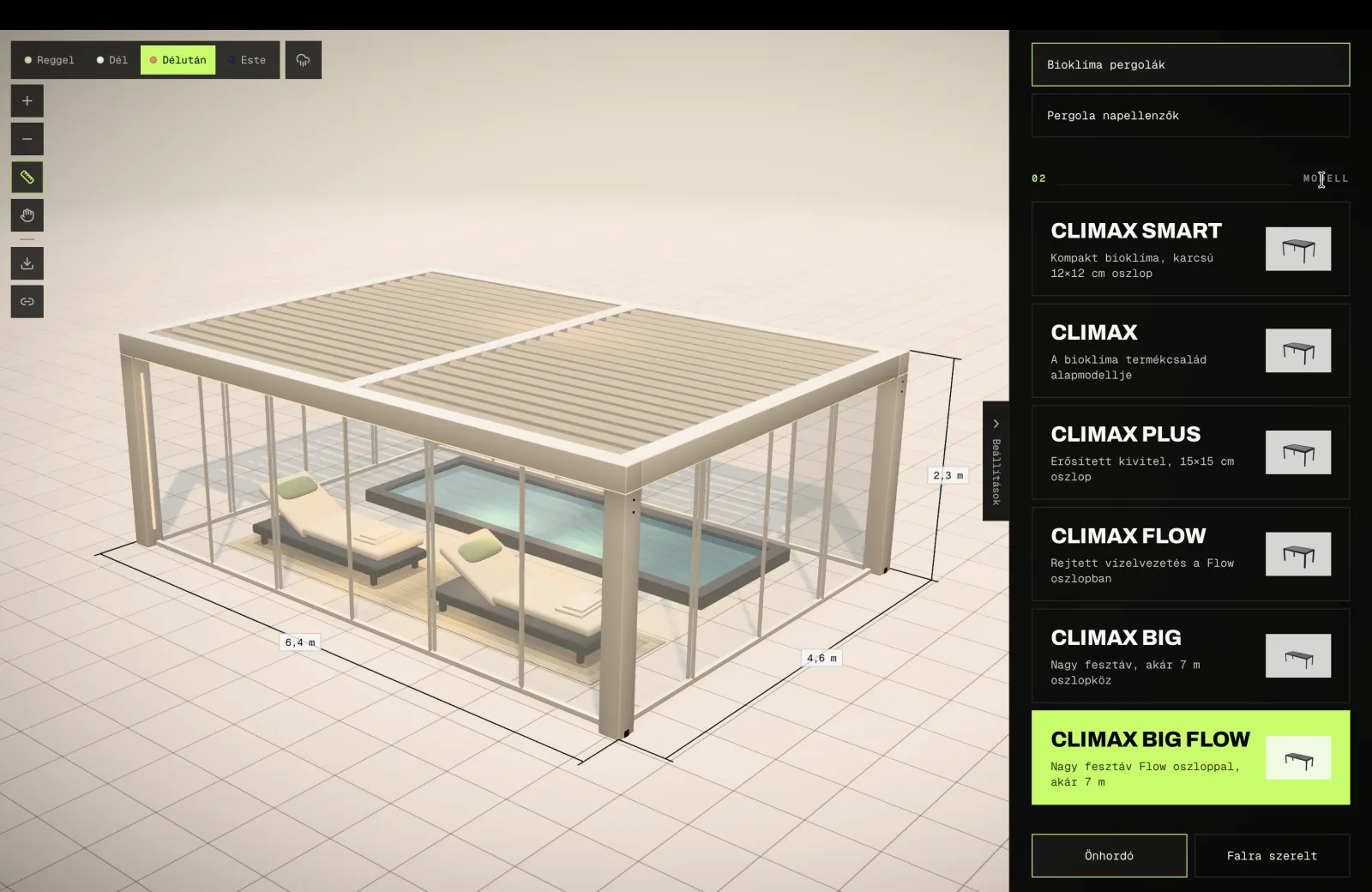
What I'd seen in this category was a dropdown next to a static render. That was the bar I wanted to raise.
The feedback that matters most
The manufacturer's technicians reviewed the models and confirmed them. When the factory CAD files did arrive later, they served as verification – the dimensions built from the catalog matched the factory's.
Then came the turn I didn't expect: the manufacturer liked the designer enough to use it themselves. An Italian-language, factory-branded edition now runs with a dealer lead form and shareable configurations. The company that sent no files became a user.
Why this is the one I'm proudest of
It wasn't my hardest technical work. But the two things I care about most met here: the wow factor, and that it actually works.
The feedback mentions the rain and the furniture shuffling, not louver geometry. Precision is the entry fee; the play is what people remember.
My best reference today: the manufacturer that provided no CAD files at the start now shows my designer to its own customers.
There's always a next level.
If you like what you see (whether you're building a product or a team) I'd love to hear about it.